

Following the launch of Hitachi Rail’s new BV700 validator, we spoke to Nicolas Cousinard, Product Line Manager for Ticketing Solutions of Hitachi Rail, to explore the vision and innovation behind this new ticketing device.
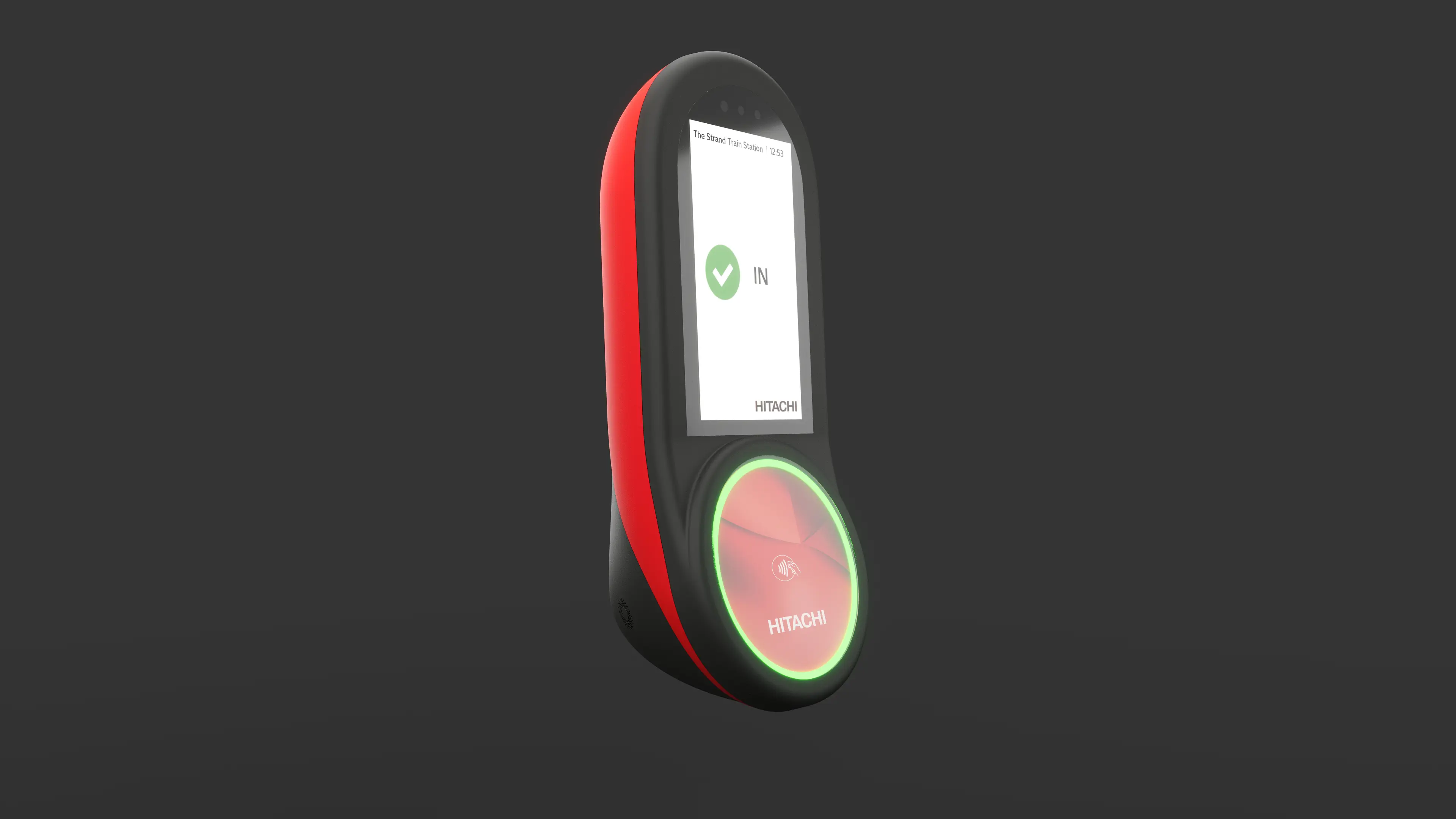
Building on the global success of the BV600, with over 50,000 units sold, the BV700 introduces new interaction capabilities, enhanced maintainability and a significantly reduced ecological footprint. Designed, engineered and manufactured in France, it integrates seamlessly within the TRANSCITY™ ticketing platform, supporting multimodal and multi‑operator networks at city, regional and national scale. For Nicolas, the BV700 is more than a product evolution — it is a statement of intent. "Passengers expect mobility to feel as seamless as the digital services they use every day,” he explains.
The BV700 is our commitment to the next decade of mobility: simpler for passengers, smarter for operators, and ready for what the future brings.

Product Line Manager, Ticketing Solutions – Hitachi Rail France
What was the vision behind developing the BV700 and what gap in the market were you aiming to address?
The BV700 marks the beginning of a new chapter in mobility — one where technology steps back so people can move forward. Our goal was to enhance the passenger experience, strengthen operational efficiency and support more sustainable mobility. Today, people unlock their phones with a glance or pay with a tap — validation should feel just as natural. We wanted to remove friction without compromising the accountability that operators and authorities rely on.
The BV700 preserves all traditional validation methods — contactless transit media, QR codes, EMV for open loop — while introducing hands‑free options such as Ultra Wideband (UWB) and facial recognition. These technologies allow validation to happen automatically, without requiring any action from the passenger, while still ensuring journeys are accurately measured, protected and fairly compensated. Moreover, the less visible the technology, the quicker and broader its adoption.
What are the most significant technological advancements introduced with the BV700?
The BV700 opens the door to new use cases, particularly hands‑free ticketing. The validator can integrate technologies like UWB or facial recognition as optional modules.
With UWB, for example, the system detects that a passenger has boarded and validates automatically. There is no need to take out a phone, tap a card or scan anything. This not only streamlines the journey but also improves accessibility for passengers with mobility challenges.
UWB provides highly accurate passenger localization near the validator, ensuring reliable validation and avoiding the misdetections seen with less precise technologies or requiring passenger having to check-in before exiting.
What improvements have been made to simplify maintenance and reduce downtime?
Maintainability was a core design principle. Firstly, the BV700 can be replaced on the fields within seconds, while repair is performed in a dedicated center. Secondly, the BV700 is fully modular, meaning each component can be replaced independently. Routine maintenance requires only removal of a few screws, and upgrades can be added quickly and cost‑effectively.
Beyond hardware, the BV700 is part of a broader ecosystem that enables complete remote management. Operators can monitor device status, deploy software updates, roll out new features and even update EMV banking keys remotely. This capability dramatically reduces operational burden and avoids unnecessary field interventions.
This combination of modular hardware and remote management ensures higher availability, lower lifecycle costs and smoother operations.
How does the BV700 reflect Hitachi Rail’s broader strategy for smarter, more sustainable mobility?
The BV700 embodies Hitachi Rail’s commitment to extended‑lifecycle and circular design principles. It uses 15% recycled and 75% recyclable materials, reducing environmental impact from the outset. Sustainability is reinforced with durability: the modular design allows operators to repair, replace or upgrade components rather than discard entire devices.
Its optimized electronics reduce energy consumption during operation and its architecture supports future technological evolution — ensuring the device remains relevant for many years.
All of this aligns with Hitachi Rail’s strategy of delivering future‑proof, upgradeable systems that help customers optimize operations, reduce waste and offer better passenger experiences.
How does the BV700 integrate with the TRANSCITY™ ticketing platform, and what benefits does this bring to multimodal mobility?
The BV700 is natively integrated into the TRANSCITY™ ecosystem, which means operators can manage their entire fleet directly from their control center. They can monitor device health, deploy updates and manage payment configurations remotely.
The validator has also been designed for multiple transport modes — rail, metro, tram or bus — enabling consistent, seamless validation across multimodal networks.
This integration strengthens operational efficiency and supports the shift toward more connected, interoperable mobility systems.
What part of the BV700’s development are you personally most proud of?
What makes me most proud is the collective effort behind the BV700. Designed and developed in France, it reflects the dedication and expertise of teams who shared a clear vision and worked together to bring it to life. Throughout the project, we aimed high, prepared for the unexpected and embraced each challenge. The BV700 is the result of that mindset — a mix of ambition, resilience and teamwork.