Want to learn more?
To discover more about SelTrac visit our Urban Rail Control & Solutions page.

To mark this milestone, we're highlighting four colleagues who have worked on SkyTrain across four different decades, sharing their perspectives on the system’s past, present, and future.
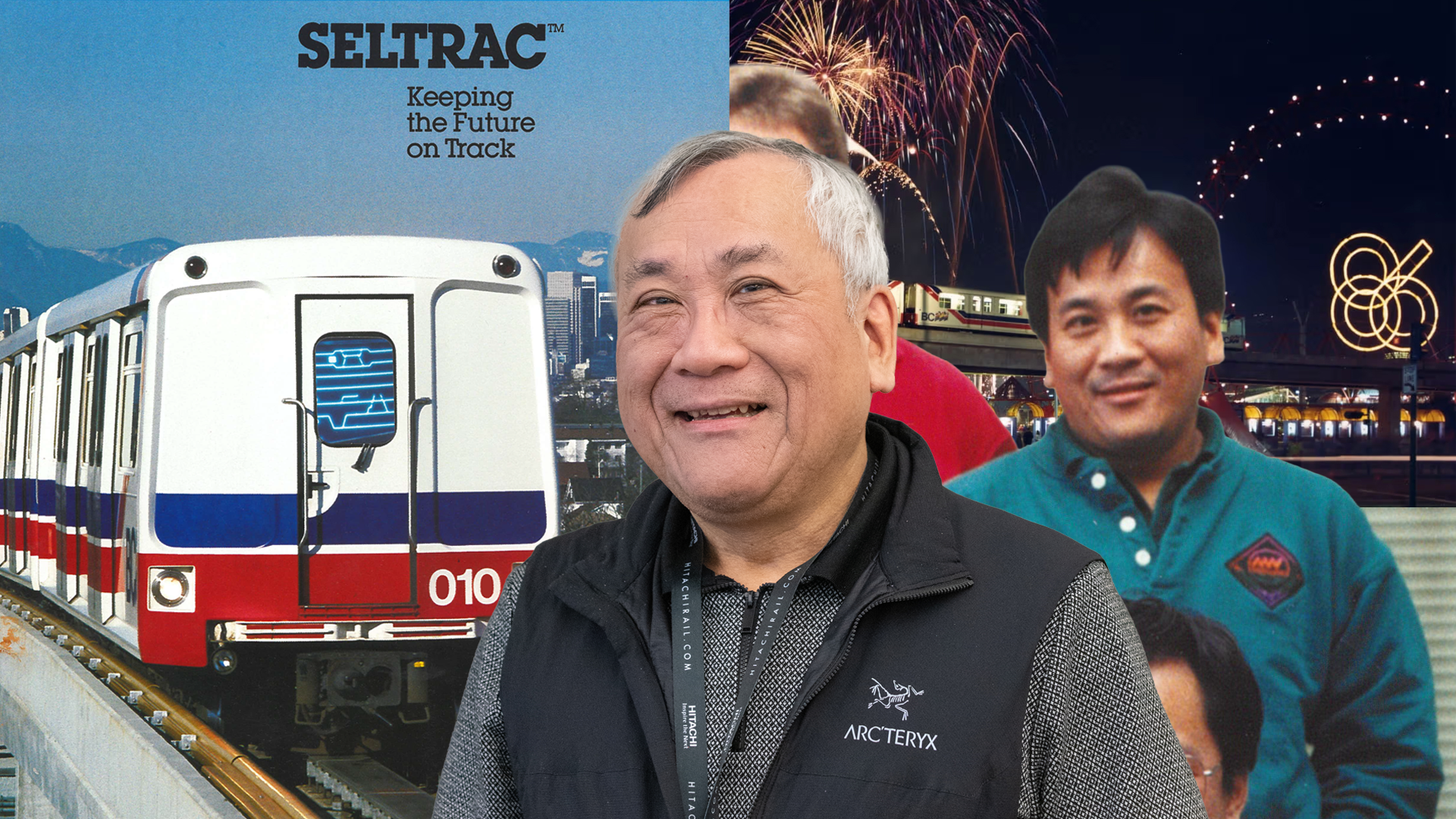
In 1984, I joined a small team of seven in Vancouver, working as an engineer on the signaling technology for the world’s first fully automated, driverless rapid transit system - SkyTrain.
Looking back, I’d consider us a startup by today’s standards. There were no rigid roles; everyone wore multiple hats and did whatever it took to support each other and get the system ready ahead of its opening at Expo ‘86. This shared purpose united our team with partners across the project.
From the start, I knew I was part of something special. What we were building had never been done before and was widely regarded as the future of rail.
During testing, construction workers would stop and watch in awe as a train moved on its own, no driver in sight. When SkyTrain launched in December 1985, I got to see the public experience that same sense of wonder, and just as importantly, see that an automated system powered by our SelTrac™ technology could operate safely and reliably.
As a lifelong Vancouver resident who has relied on public transit, I take great pride in having helped bring SkyTrain to life. Seeing the lasting impact our SelTrac™ technology has had, not only in the city I call home, but around the globe is special for me.
Beyond the technology, what stands out most to me is the partnership behind it. One of my closest colleagues at TransLink started the same week I did in 1984. More than 41 years later, we’re still working together, grabbing lunch from time to time and reminiscing about those early days.
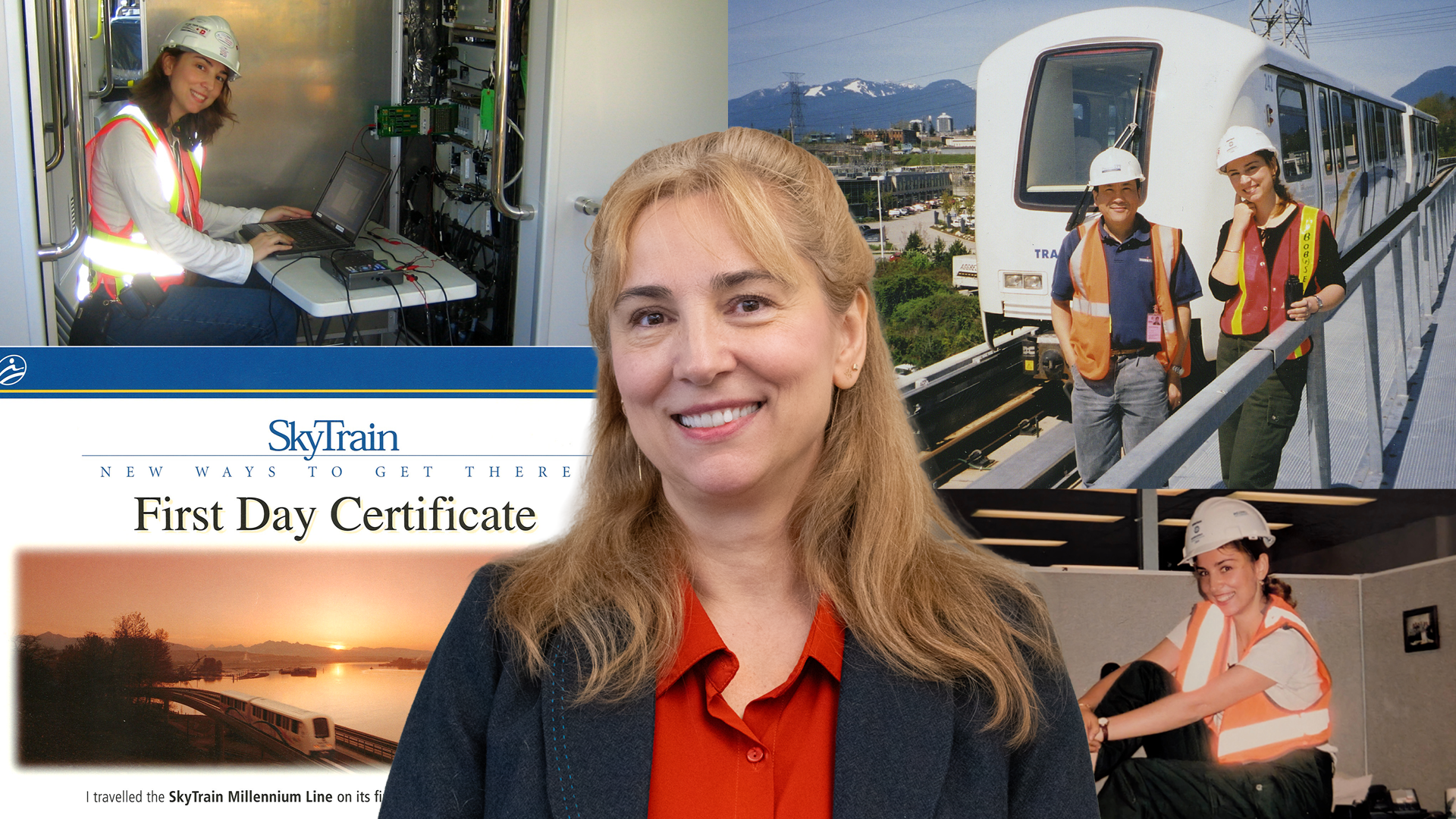
In 1999, my husband and I moved from Romania to Vancouver. We both interviewed at Hitachi Rail and were hired within the same week, each in different roles.
I started on the Installation, Planning and Design team, supporting technical drawings, and later moved into on-site testing and commissioning activities across the SkyTrain system.
I still remember the first time I stepped onto the elevated guideway. I felt privileged to have such a unique and beautiful view of the city, and proud to be working on the signaling system that was connecting its people.
At the time, we were delivering our SelTrac™ technology for one of the most significant transit expansions the region had ever seen: the SkyTrain Millennium Line. Working alongside TransLink and our partners, there was a strong spirit of camaraderie, with everyone working in sync like a well-oiled machine to deliver the project without disrupting existing service.
The opening day of the Millennium Line in 2002 is a moment I’ll never forget. Watching the city embracing a new line we had worked so hard to deliver was one of the most rewarding moments of my career.
Over the years, I’ve seen firsthand how the Millennium Line helped transform the region, with communities flourishing along the corridor. As the SkyTrain network grew, our SelTrac™ technology evolved alongside it to support growing ridership, reducing headways between trains and enabling more frequent service and shorter commute times.
Areas like Burnaby, where our office of more than 90 employees is located today, grew dramatically as improved transit access supported new job opportunities and drove the development of housing, malls, and businesses.
It reinforced for me that the work we were doing was important, not just in moving people, but in shaping cities, supporting communities, and contributing to society.
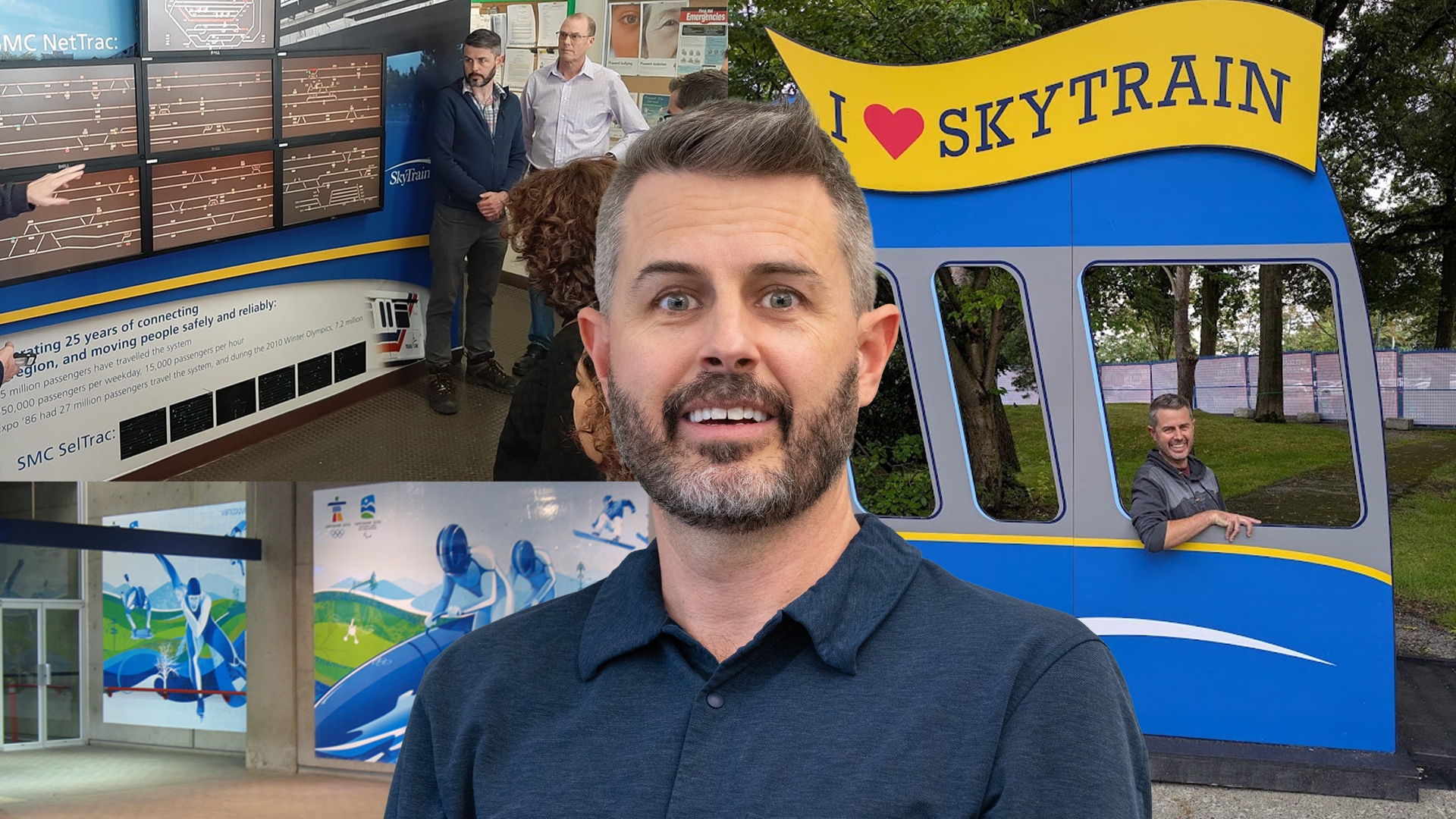
I’ve always believed that anyone who works on SkyTrain for a period of time begins to realize they’re part of something bigger than just a project, a family. I became part of that family when I moved to Vancouver in 2006, after joining Hitachi Rail two years earlier in Toronto.
At the time, we were delivering our SelTrac™ signaling technology on the new Canada Line, a major expansion built to connect Vancouver International Airport to the city and the broader SkyTrain network ahead of the 2010 Winter Olympics.
The Olympics were a defining moment. Our SelTrac™ system was pushed to its limits as the city filled with visitors and events ran back-to-back. During the first week of competition, SkyTrain ridership on the Expo and Millennium Lines increased by approximately 54 percent, rising to an average of nearly 370,000 daily riders.
Trains operated at tight headways for extended periods, and teams from Hitachi Rail and TransLink worked around the clock to keep the system performing exactly as it needed to. As both an Engineer and a rider attending events across the city, I saw firsthand how SkyTrain continued to run reliably under sustained peak demand.
As my role on SkyTrain evolved, I took on greater responsibility, leading the bid for the Evergreen Line Extension and managing the project through to revenue service. I made a point of riding the line on opening day, only to later discover I’d ended up in the background of a news broadcast when several colleagues told me, “I saw you on TV!”
To everyone who has been part of the SkyTrain journey, past, present, and future, there is a strong sense of pride in the work we do. For more than 40 years, this collective effort has kept SkyTrain moving and serving generations across the city. It is not just a system or a project. It is part of people’s daily lives, and that shared sense of responsibility is what makes SkyTrain feel like a family.
When the Dubai Metro launched in 2009, I remember riding it on opening day and being captivated by the fact that the train was operating without a driver. Years later, I never imagined I would be working with that exact same SelTrac™ driverless technology at Hitachi Rail.
In 2020, I was offered the role of Project Safety Manager in Vancouver. Having experienced how driverless transit can transform a city, I knew immediately that the opportunity aligned with my values, particularly around sustainability.
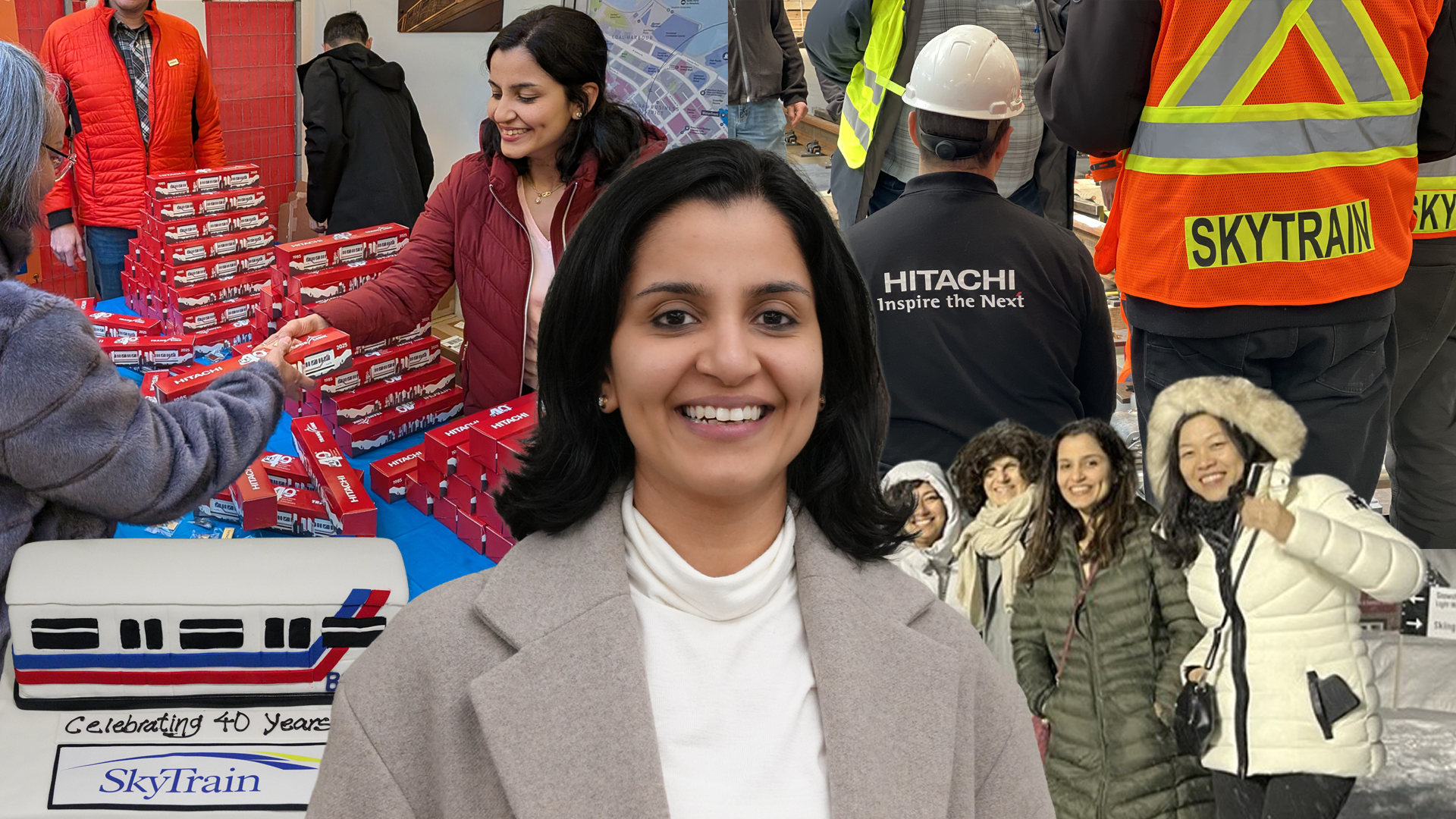
After five years of working on SkyTrain, it has become something I feel personally connected to. That connection was reinforced this year, when I joined TransLink and our partners at Waterfront Station to celebrate SkyTrain’s 40th anniversary. Speaking with riders and seeing their enthusiasm firsthand was a powerful reminder of how much this system means to the people who rely on it every day.
For over 40 years, our SelTrac™ technology has kept the SkyTrain system operating reliably. My work has focused on ensuring that this proven foundation continues to meet today’s expectations, including alignment with modern safety standards. In recent years, the system has evolved through updated system architectures, upgraded onboard and control technologies, and strengthened cybersecurity protections. The goal has always been to build on what already works, while putting clear foundations in place for future upgrades and making the work easier for the teams who come after us.
What began as an 18 km line in 1985 has grown into an approximately 80 km network serving more than 50 stations across Metro Vancouver, shaped through years of close collaboration with TransLink and our partners. As SkyTrain looks ahead to the next 40 years, I’m proud to contribute to a system with such a strong legacy, and to support its continued evolution for the years ahead.